Side by side
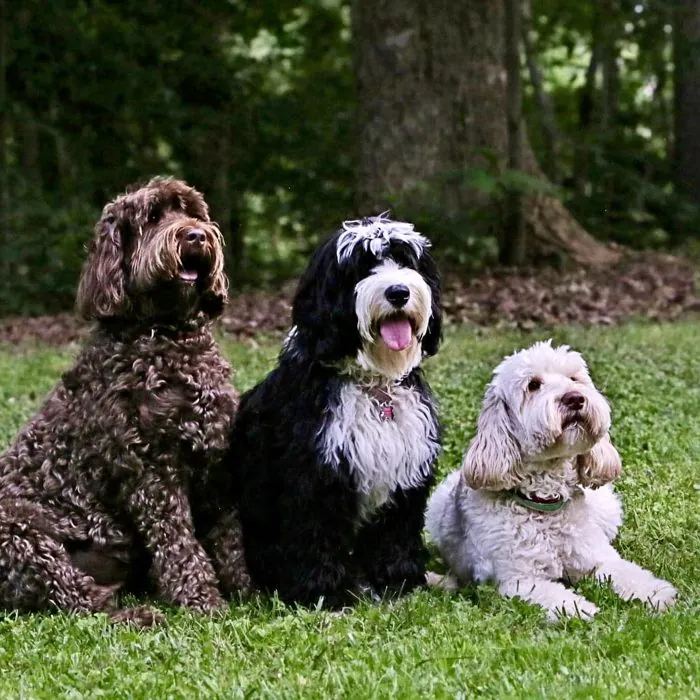
Australian Labradoodle
- A developed breed, 35+ years in the making — refined in Australia from the original Tegan Park & Rutland Manor lines
- Parent breeds: Labrador, Poodle and carefully infused English & American Cocker Spaniel lines
- Multigenerational: ALD parents on both sides, for generations — traits are locked in
- Predictable non-shedding fleece or wool coat — allergy-friendly by design, not by luck
- Consistent teddy-bear look — you know what your puppy will grow into
- Predictable adult size — true-breeding mini, medium and standard lines
- Bred for service & therapy temperament — intuitive, gentle, even-keeled, eager to please
- Registered & pedigreed through the ALAA, with four-generation pedigrees
- Held to published health-testing standards — OFA hips, elbows & heart, CERF eyes, full genetic panels (see our girls & sires)
- Breeder accountability — ALAA members commit to breed standards, health testing and ethics to keep their membership
- Easy, low-odor grooming — regular brushing and trims, minimal "dog smell"
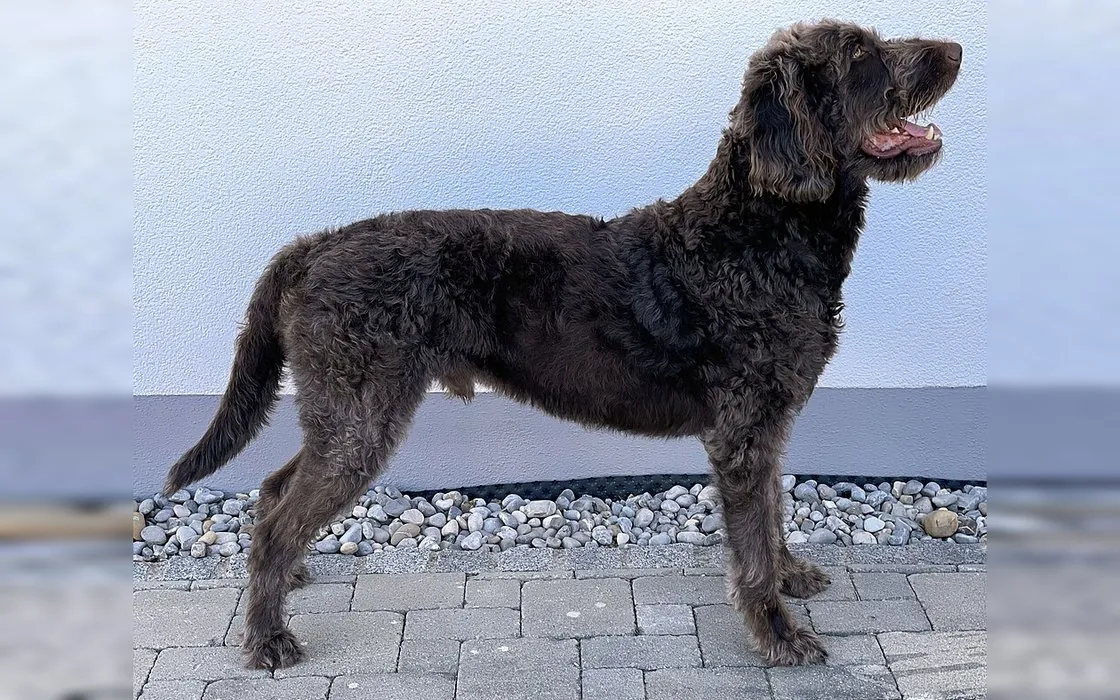
Labradoodle (early generation)
- A first-cross hybrid, not a breed — Labrador Retriever × Poodle (F1, F1b, F2…)
- Two parent breeds only — no refining lines, no breed development
- Single-generation cross — genetics reshuffle every litter
- Coat is a coin flip: some shed heavily, some don't — even within one litter
- Looks vary wildly — wiry, shaggy, curly or flat-coated, all from the same parents
- Adult size can surprise you — a "mini" cross can outgrow its estimate by 20+ pounds
- Temperament varies between the Lab's exuberance and the Poodle's intensity
- Usually unregistered — no pedigree paper trail behind the puppy
- Health testing optional — often limited or entirely absent
- No membership standards — anyone with two dogs can breed and advertise
- Grooming needs unpredictable — depends entirely on which coat the puppy inherited
Photo: Anton Porsche via Wikimedia Commons, CC BY-SA 4.0
Neither dog is "bad" — plenty of early-generation Labradoodles are wonderful pets. But if your family needs the non-shedding coat and the even, intuitive temperament — because of allergies, small children, or therapy work — the multigenerational Australian Labradoodle is the version where those traits are bred in, not hoped for. That predictability is exactly what Tillery's four-generation pedigrees and published health testing protect.