The question every doodle family asks

Australian Labradoodle vs. Labradoodle

They share a name, but they're not the same dog. Here's the honest difference — and why it matters for shedding, allergies, and temperament.

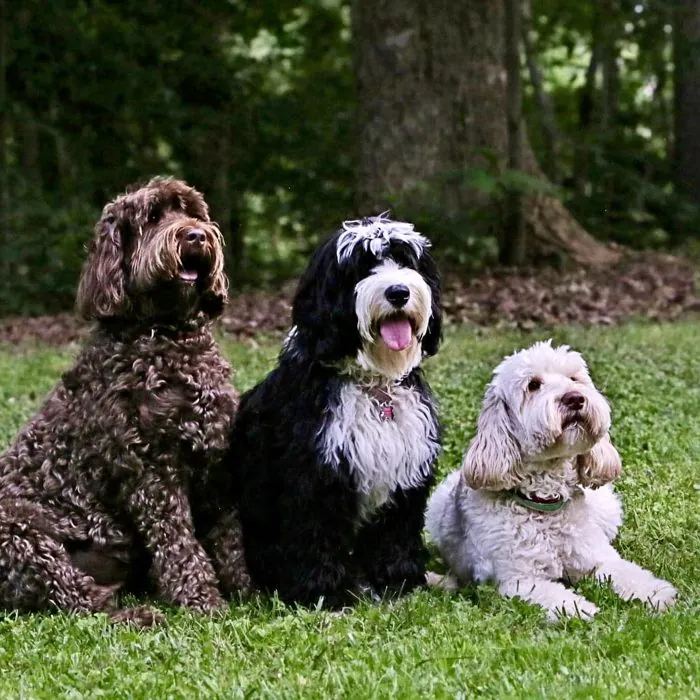
Three multigenerational Australian Labradoodles from Tillery Labradoodles sitting together on the grass

Australian Labradoodle

  • A developed breed, 35+ years in the making — refined in Australia from the original Tegan Park & Rutland Manor lines
  • Parent breeds: Labrador, Poodle and carefully infused English & American Cocker Spaniel lines
  • Multigenerational: ALD parents on both sides, for generations — traits are locked in
  • Predictable non-shedding fleece or wool coat — allergy-friendly by design, not by luck
  • Consistent teddy-bear look — you know what your puppy will grow into
  • Predictable adult size — true-breeding mini, medium and standard lines
  • Bred for service & therapy temperament — intuitive, gentle, even-keeled, eager to please
  • Registered & pedigreed through the ALAA, with four-generation pedigrees
  • Held to published health-testing standards — OFA hips, elbows & heart, CERF eyes, full genetic panels (see our girls & sires)
  • Breeder accountability — ALAA members commit to breed standards, health testing and ethics to keep their membership
  • Easy, low-odor grooming — regular brushing and trims, minimal "dog smell"
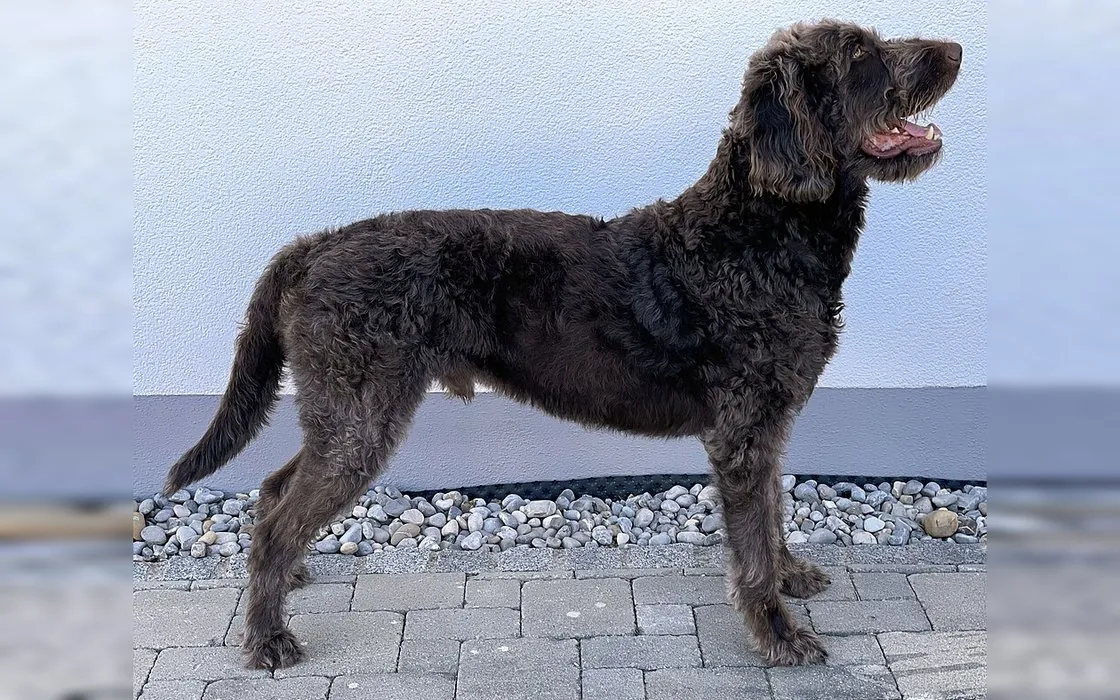
A chocolate first-generation Labradoodle standing in full side profile, showing a scruffier hair coat

Labradoodle (early generation)

  • A first-cross hybrid, not a breed — Labrador Retriever × Poodle (F1, F1b, F2…)
  • Two parent breeds only — no refining lines, no breed development
  • Single-generation cross — genetics reshuffle every litter
  • Coat is a coin flip: some shed heavily, some don't — even within one litter
  • Looks vary wildly — wiry, shaggy, curly or flat-coated, all from the same parents
  • Adult size can surprise you — a "mini" cross can outgrow its estimate by 20+ pounds
  • Temperament varies between the Lab's exuberance and the Poodle's intensity
  • Usually unregistered — no pedigree paper trail behind the puppy
  • Health testing optional — often limited or entirely absent
  • No membership standards — anyone with two dogs can breed and advertise
  • Grooming needs unpredictable — depends entirely on which coat the puppy inherited
Photo: Anton Porsche via Wikimedia Commons, CC BY-SA 4.0

Neither dog is "bad" — plenty of early-generation Labradoodles are wonderful pets. But if your family needs the non-shedding coat and the even, intuitive temperament — because of allergies, small children, or therapy work — the multigenerational Australian Labradoodle is the version where those traits are bred in, not hoped for. That predictability is exactly what Tillery's four-generation pedigrees and published health testing protect.

Quick answers

Do Australian Labradoodles shed?

Very little to not at all. Authentic multigenerational Australian Labradoodles have fleece or wool coats that are low-shedding and allergy-friendly — one of the main reasons the breed was developed. Families with allergies regularly succeed with ALDs when other dogs weren't possible.

Are Australian Labradoodles hypoallergenic?

No dog is 100% hypoallergenic, but multigenerational Australian Labradoodles are among the most allergy-friendly breeds in the world. Their non-shedding fleece coats produce far less dander. One Tillery family of six — with a child managing allergies and asthma — told us their Tillery Labradoodle changed everything.

What's the difference between an Australian Labradoodle and a regular Labradoodle?

A Labradoodle is a Labrador × Poodle cross, and early-generation crosses (F1, F1b) have unpredictable coats and temperaments. The Australian Labradoodle is a purpose-developed breed refined over 35+ years from the original Tegan Park and Rutland Manor lines in Australia, with carefully infused Cocker Spaniel lines — bred multigenerationally so coat, temperament and structure are consistent and predictable.

What does 'multigenerational' mean?

It means both parents are Australian Labradoodles themselves — often for many generations — rather than first crosses. That's why a multigen ALD puppy's non-shedding coat and intuitive temperament are predictable, and why every Tillery puppy comes with a four-generation pedigree.

Are Australian Labradoodles good family dogs?

Exceptional ones. They were bred for service and therapy work, which means an intuitive, eager-to-please, gentle temperament — patient with toddlers, devoted to their people, and quick to learn. Tillery puppies are also raised on the Puppy Culture and Bad Ass Breeder curriculum, so socialization starts before they ever come home.

How long do Australian Labradoodles live?

Typically 13–15 years. Comprehensive health testing of the parents — hips, elbows, eyes, heart and genetic panels, with each dog's own results published for every Tillery dam and sire — is the biggest factor in a long, healthy life.